How can membrane technology benefit cheese producers?
Emerging trends in membrane technology for cheese production emphasize energy efficiency, reduced feed pressure and improved CIP systems.
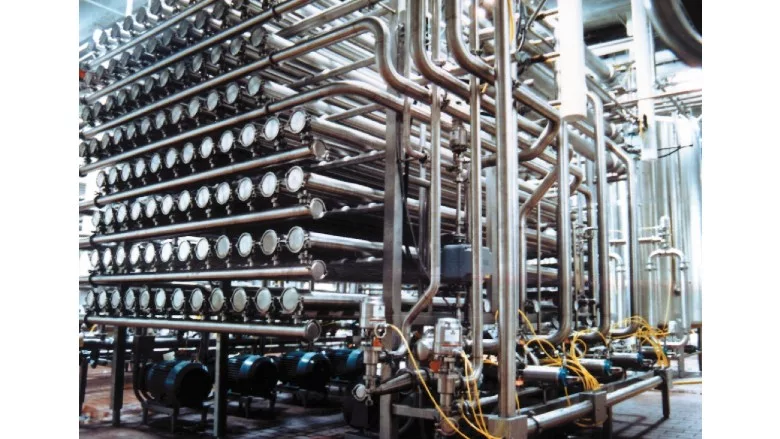
Courtesy of Veolia Water Technologies & Solutions
Variation in milk protein levels can adversely impact quality and yield in cheese production. To standardize protein content, cheesemakers can utilize membrane technology, resulting in optimized quality and yield for cheese products.
Veolia Water Technologies & Solutions, a division of the Veolia group specializing water and wastewater treatment solutions for industrial and public customers, has deep expertise in membrane technology and its applications within cheese production, actively providing solutions for dairy producers to utilize membrane filtration for processes like whey protein recovery, concentration of milk components and overall efficiency improvements in cheese making; they offer a range of membrane technologies specifically designed for the dairy industry including ultrafiltration, nanofiltration and reverse osmosis.
Frederick Liberatore, Global Director - Filters & Spiral Wound Membranes, Veolia Water Technologies & Solutions, recently sat down with Dairy Foods magazine to discuss emerging trends in membrane technology for cheese production, key considerations for cheese processors implementing membrane technology and much more.
Dairy Foods: What emerging trends are influencing membrane technology development, specifically for cheese production and processing?
Frederick Liberatore: Some of the key advancements we're making in membrane technology include:
A major focus is on improved materials and construction to extend the service life of our elements. Additionally, we're committed to energy-efficient element designs that reduce operating cost.
Specifically, our new Optum membrane element offers significant energy savings, resulting in lower OPEX and CAPEX. This is achieved through reduced operating energy and smaller recirculation pump requirements for RO (Reverse Osmosis) and NF (Nanofiltration) plants. The Optum element also features improved ergonomics for easier loading and unloading.
We believe these innovations will greatly benefit the cheese manufacturing operations.
 Veolia RO Membranes | Optum Series. Courtesy of Veolia Water Technologies & Solutions
Dairy Foods: How can dairy processors utilize membrane technology to improve or optimize their production process?
Frederick Liberatore: Membrane technology offers several optimization opportunities in dairy production. For instance, membranes can increase milk concentration and fractionate whey, aiding in protein standardization. By achieving higher concentrations, membrane systems can reduce the size and cost of spray dryers.
A current industry trend is to reach 30% solids in the retentate. This requires specialized membranes to manage higher solids throughout the system without excessive pressure drops or element clogging. Ultimately, this increases the capacity of existing plants and significantly reduces spray dryer capital costs.
For a cheese manufacturer looking to increase whey powder production, a membrane plant can optimize concentration and boost output with their existing spray dryer. This represents a significant optimization opportunity.
Historically, whey from cheese production was considered waste. However, as we began processing whey, its value became evident. Today, whey protein constitutes a substantial portion of a cheese manufacturer's annual revenue. Membrane separation is essential for isolating, purifying, and concentrating proteins for standardization and the creation of functional food ingredients. This optimization, combined with increased spray dryer capacity, transforms a former waste product into a significant revenue source.
The evolution of membrane technology, enabling higher concentrations and continues to benefit cheese manufacturers
Dairy Foods: How are sustainability initiatives impacting membrane technology? Are these initiatives driving the category forward for dairy producers?
Frederick Liberatore: The treatment and reuse of wastewater from milk plants presents a sustainability challenge and addresses the environmental discharge. UF/MBR technology plays a crucial role in addressing the sustainability of a dairy or cheese manufacture.
When considering membrane technology for whey processing, two key initiatives are worth highlighting:
- The use of a polisher RO to recover and purify RO/NF permeates and COW water for reuse in CIP. This approach actually helps a dairy plant reduce the need for fresh water!
- Improved element construction resulting in longer element lifetime in operation. When I started in this industry elements lasted a few months and today the average element lifetime is 3 years! Resulting in less waste.
Dairy Foods: For cheese processors who are looking to implement membrane technology at the plant for the first time, what are some key considerations they should think about before they implement these systems?
Frederick Liberatore:: I strongly advise that anyone in the dairy industry planning to build a membrane plant should take the following precautionary steps:
- Before purchasing equipment, visit the facilities of potential suppliers' customers. This will allow you to see their systems in operation and gain valuable insights into the manufacturer's credibility directly from those who have experience with their products.
Once you have gathered this information, narrow your choices down to the top three membrane manufacturers in the relevant sector, whether it be waste treatment or process applications. Again, be sure to visit their customers' plants before making any final decisions.
By following this advice, you can make a more informed and confident decision when selecting a membrane system supplier.
Dairy Foods: How is membrane technology helping your cheese customers break into new markets?
Frederick Liberatore: Throughout my career, I've collaborated extensively with technology groups in cheese factories. These facilities often have labs and pilot equipment, and I've frequently provided them with flat sheet membranes for separation testing on a small lab scale. However, the primary focus has always been on ingredients: developing new ingredients and functional foods, as well as standardizing and improving existing formulas and ingredients through purification using ultrafiltration and microfiltration, separation with nanofiltration, and concentration with reverse osmosis. These processes enable whey processors to attain specific protein levels for desired thickness, functionality, texture, and consistency.
Milk, protein, and cheese byproducts are valuable resources in this context. The ability to rapidly incorporate a high protein content into convenient, consumable formats like protein bars is a key driver of protein demand and the trend towards fast, functional foods.
It was evident at last year's IWC in Ireland that companies are successfully breaking into new markets by achieving ways to get functional protein levels and incorporating them into fast food snacks that are both convenient and healthy.
Dairy Foods: Was there anything else about membrane technology in cheese production or with product innovation that you'd like to share?
Frederick Liberatore: The gap I see in our industry: the end-of-life management of operational elements. While these components are not hazardous, their disposal in landfills is a growing concern.
Given the typical two-to-three-year lifespan of these elements, the volume of discarded membranes, for example, is substantial. Although membranes generally represent a positive example of resource recovery, the necessity of landfilling plastic material remains a challenge for our industry.
We must find sustainable solutions to address this issue.
Looking for a reprint of this article?
From high-res PDFs to custom plaques, order your copy today!